
Breadcrumbs

Research
Research
Research digests from Open Educational Resources / Open Source Physics @ Singapore. Each article translates a paper into classroom moves, implementation notes, and related open resources.
- Hits: 493
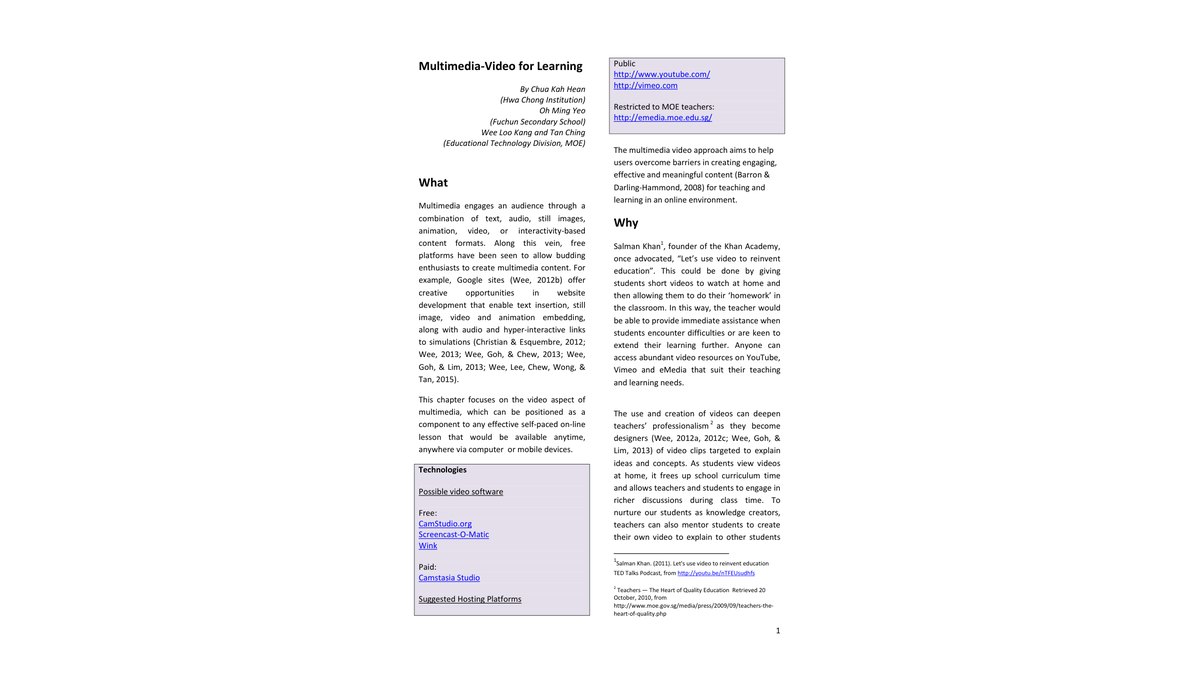
Research digest: This paper is about using video as a learning object rather than as decoration. The strongest use is when video slows down a hard-to-see phenomenon, supports replay, and gives students a shared piece of evidence for discussion.
Classroom use: Use short, purposeful clips before or after an inquiry activity. Pair each clip with a question that students answer using visible evidence from the video.
- Hits: 541
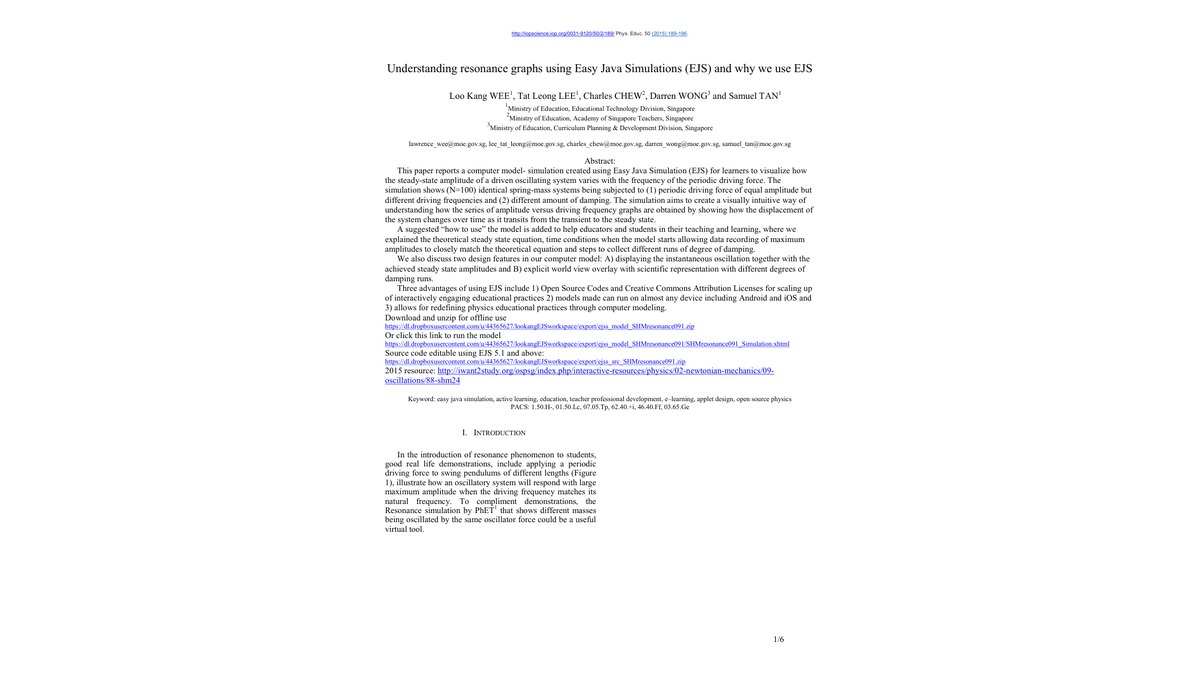
Research digest: This paper makes resonance graphs less mysterious by letting students vary driving frequency, damping, and amplitude while seeing the system respond. The article is useful when students can draw the resonance peak but cannot yet explain what the peak represents physically.
Classroom use: Start with prediction: where will the largest amplitude occur? Then let students change the driving frequency and compare the simulated motion with the graph.
Read more: Understanding resonance graphs using Easy Java Simulations (EJS) and why we use EJS
- Hits: 2636

Research digest: This paper shows how virtual instruments can prepare students for real measurement. The main design ideas are simple views, hints and answers, scale options, zero error, and assessment feedback.
Classroom use: Let students practise reading the virtual scale first, then immediately use the real instrument. Ask them to state reading, unit, precision, and zero-error correction.
- Hits: 485

Research digest: The key contribution is the framing of video analysis as a performance task: students do not only answer end-of-chapter questions, they collect evidence, model a situation, and defend a scientific explanation. It is a practical bridge between school physics and the habits of scientists.
Classroom use: Give students a real motion clip, a guiding question, and a model-building requirement. The product can be a graph, a fitted model, and a short claim-evidence-reasoning explanation.