
Breadcrumbs

Research
Research
Research digests from Open Educational Resources / Open Source Physics @ Singapore. Each article translates a paper into classroom moves, implementation notes, and related open resources.
- Hits: 672

Research digest: This paper connects gravity simulations to inquiry pedagogy. Students can investigate how gravitational field, potential, orbital motion, or satellite behaviour changes when conditions are varied.
Classroom use: Ask students to predict before changing a parameter. Then require an explanation using force, field, energy, or orbital language as appropriate.
Read more: Enabling Gravity Physics by Inquiry using Easy Java Simulation
- Hits: 598
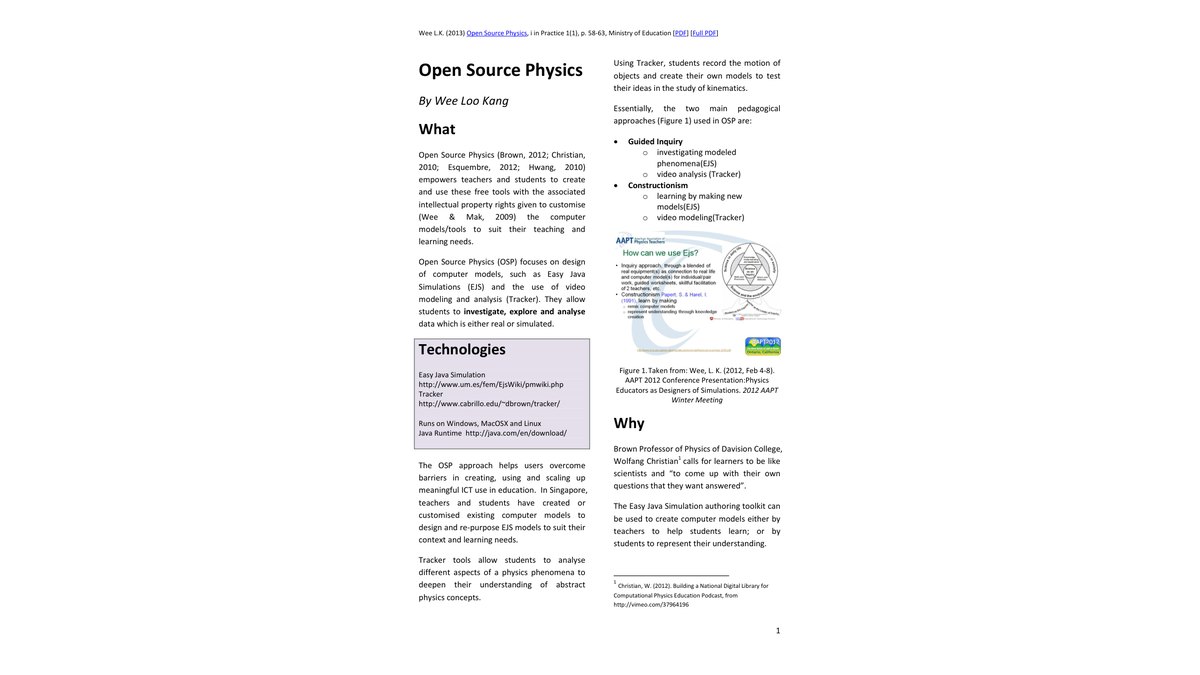
Research digest: This article is a readable entry point into the Open Source Physics philosophy: accessible tools, editable models, and a culture of sharing. It helps explain why the resource library is built around open, reusable simulations.
Classroom use: Use it with teachers or students to discuss why open tools matter and how a simulation can be improved by a learning community.
- Hits: 603
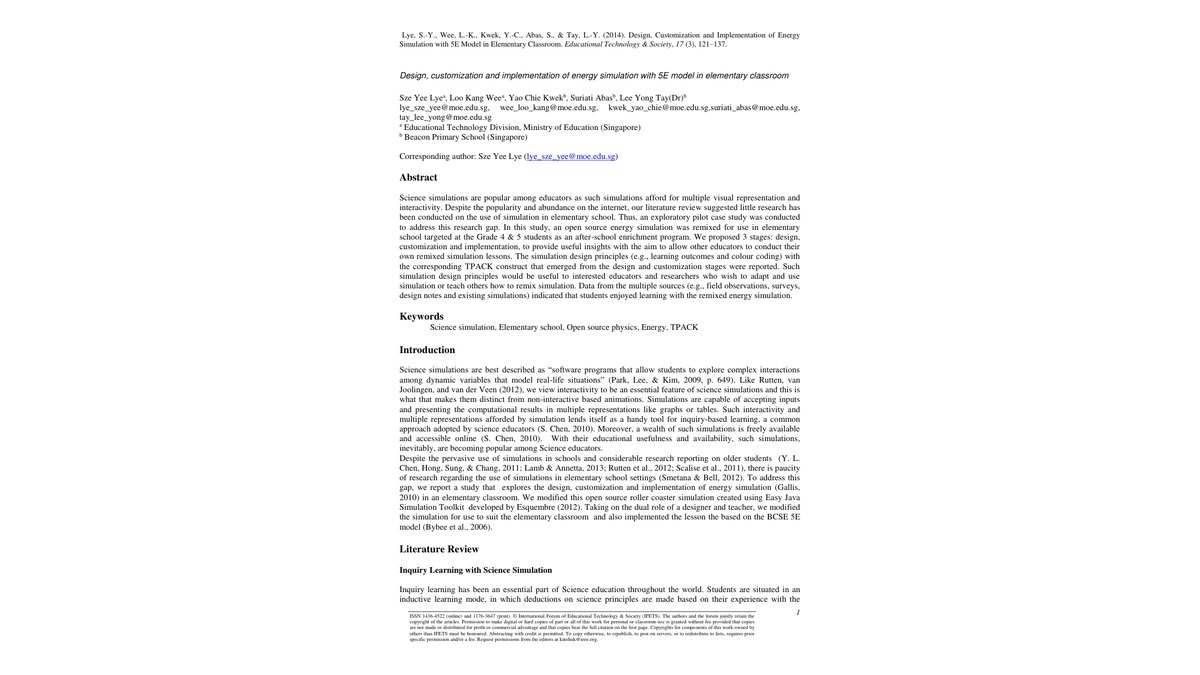
Research digest: The paper connects an energy simulation to the 5E learning cycle: engage, explore, explain, elaborate, and evaluate. It is useful for primary or lower-secondary teaching where energy ideas need concrete representations.
Classroom use: Use the simulation in Explore before formal explanation. Students manipulate a scenario, describe energy changes, then refine their language during Explain.
- Hits: 694
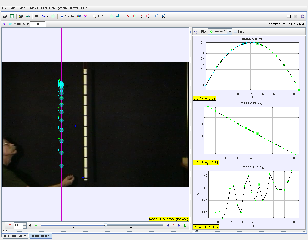
Research digest: This paper is a classroom case for helping beginning physics students connect a real video of vertical motion with displacement-time and velocity-time representations. The useful classroom idea is not merely to show a video, but to let students measure, fit, and then model the motion so that acceleration due to gravity becomes an evidence-based claim.
Classroom use: Use a short toss-up or free-fall clip. Ask students to track the object, inspect the velocity-time graph, and explain why the slope stays nearly constant even though the direction of velocity changes.
Read more: Using Tracker to understand toss up and free fall motion: a case study
- Hits: 586

Research digest: This paper is a reflection on scaling Open Source Physics work beyond isolated lessons. Its practical value is in the conditions for adoption: teacher ownership, editable resources, community sharing, and examples that match syllabus needs.
Classroom use: Use it as a planning reference for departments adopting simulations: start small, collect teacher feedback, and build a reusable lesson bank.
Read more: NRF2011-EDU001-EL001 EduLab Project Scaling-up Reflections on Using Open Source Physics
- Hits: 649
Research digest: This broad paper documents the design of EJS computer models for teaching. It is useful as a foundation article for the whole OSPSG approach: teachers and students learn through manipulable models, not only static explanations.
Classroom use: Choose one model and identify the variable students should change, the representation they should read, and the explanation they should write.
Read more: Computer Models Design for Teaching and Learning using Easy Java Simulation
- Hits: 601

Research digest: This conference paper focuses on how video analysis and modeling can support practices such as asking questions, analyzing data, using mathematics, and constructing explanations. The classroom value is in the task design, not the software alone.
Classroom use: Ask students to submit a model, the data that informed it, and a short explanation of limitations.
- Hits: 819
Research digest: This paper argues that teachers can be designers of physics models, not just users of software. Gravity is a strong context because learners can manipulate parameters and compare motion that is otherwise hard to observe directly.
Classroom use: Use a gravity model to ask: what changes when mass, distance, or initial velocity changes? Then connect the visual output to Newtonian reasoning.
- Hits: 539
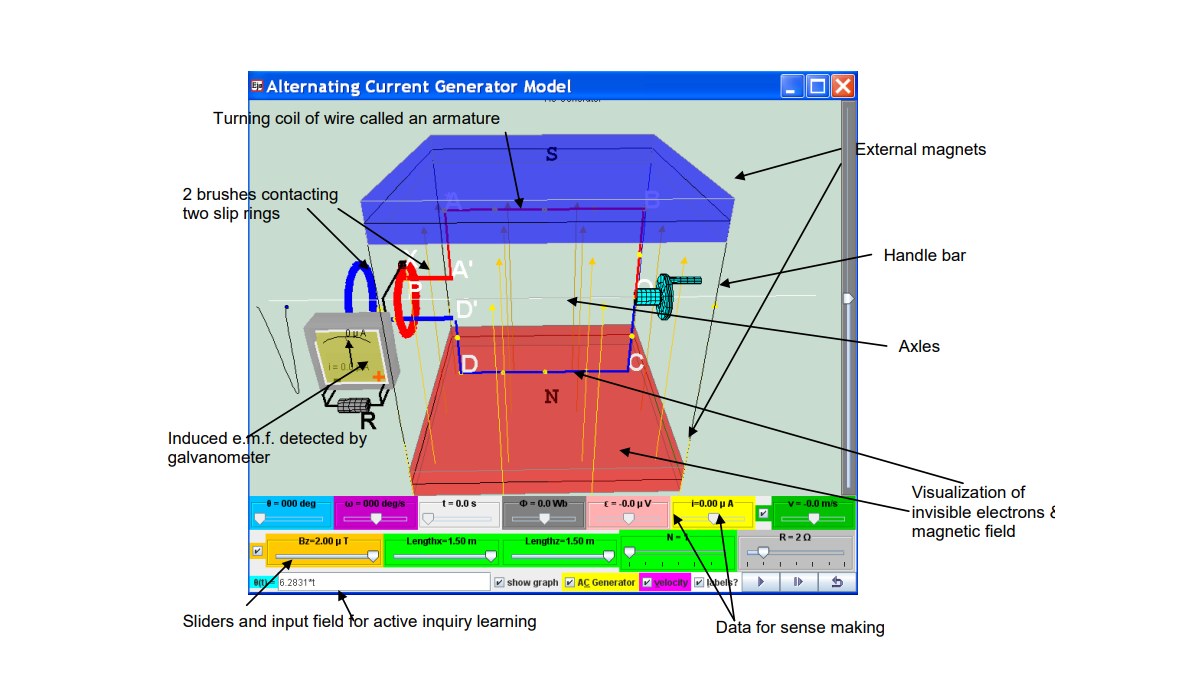
Research digest: Electromagnetic induction is conceptually dense because learners need to coordinate motion, magnetic field change, induced current, and direction. This paper supports a blended approach where simulation, discussion, and classroom tasks work together.
Classroom use: Let students vary magnet speed, coil turns, or field orientation in a simulation before discussing Faraday's and Lenz's laws.
Read more: Use of Blended Approach in the Learning of Electromagnetic Induction
- Hits: 587
Research digest: This paper frames Tracker activities as open educational resources that teachers can reuse and adapt. It is especially useful as a blueprint for turning a one-off performance task into a sharable lesson package.
Classroom use: Package each task with the video, analysis file, guiding question, expected graph, and sample explanation.
- Hits: 554
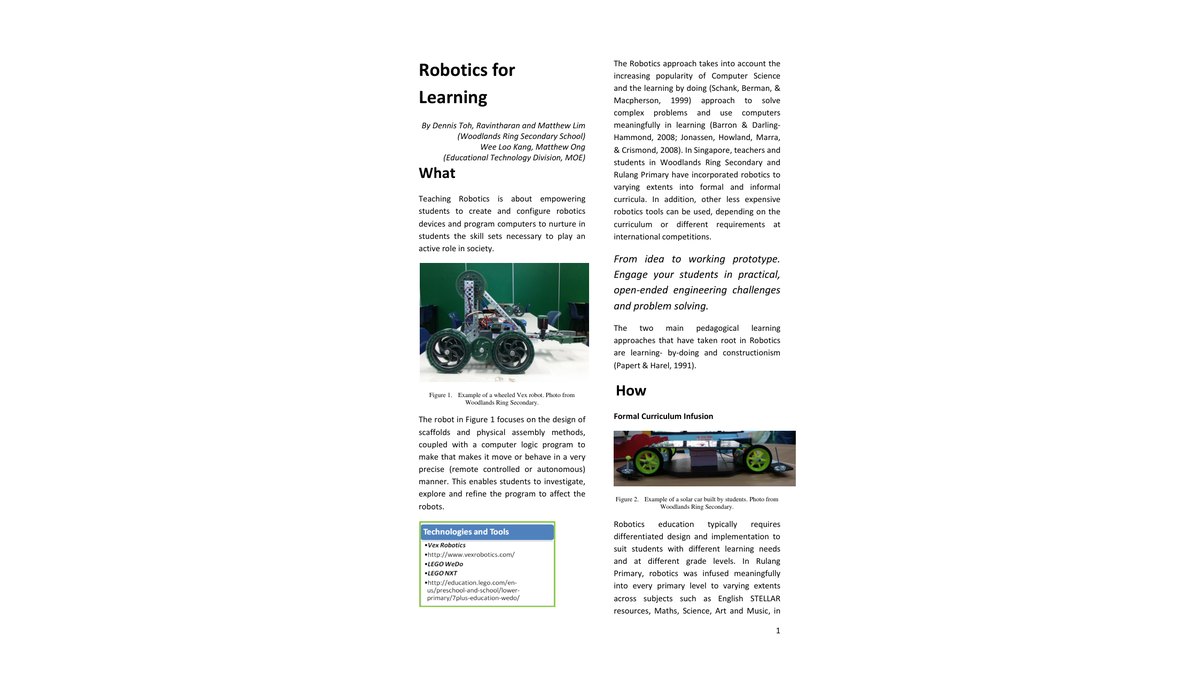
Research digest: The paper positions robotics as a way for students to make ideas tangible. It is most applicable when the robot is not treated as a gadget, but as a controllable system that can expose measurement, iteration, debugging, and cause-effect reasoning.
Classroom use: Set a simple robot challenge with constraints, then ask students to test, revise, and explain why each design change improved or worsened performance.