
Breadcrumbs
- You are here:
-
Home

-
Interactive Resources
-
Physics
-
02 Newtonian Mechanics
- 06 Collisions
02 Dynamics
Dynamics is a branch of applied mathematics (specifically classical mechanics) concerned with the study of forces and torques and their effect on motion, as opposed to kinematics, which studies the motion of objects without reference to its causes. Isaac Newton defined the fundamental physical laws which govern dynamics in physics, especially his second law of motion. Example for equations or models are F = ma. This topic is a rich source for mathematical modeling pedagogy, we speculated has a role to play for cliching the award by UNESCO King Hamad Bin Isa Al-Khalifa Prize for the Use of ICTs in Education 2015 for Singapore. Conservation of momentum in collisions and explosions allowing the prediction of subsequent motion of the objects or particles. Forces exist in pairs and they act in opposite directions on the two different bodies.
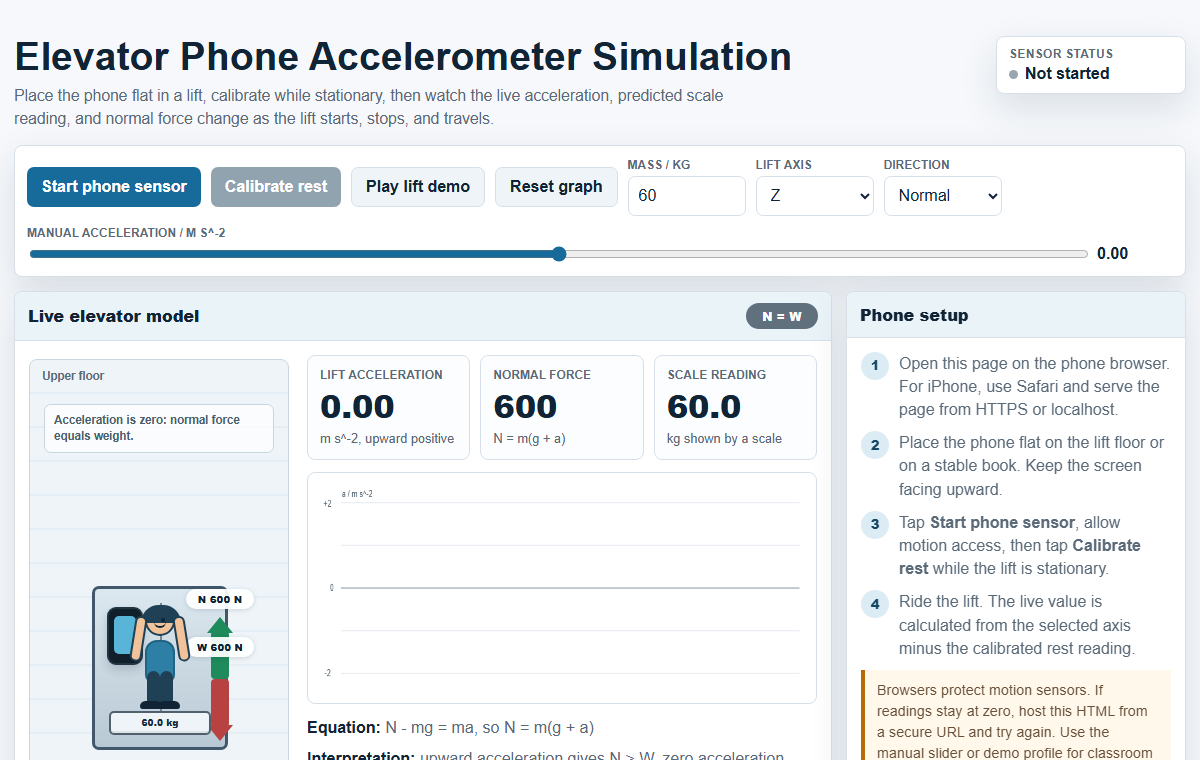
Interactive elevator phone accelerometer simulation for Newtonian mechanics: this browser-based model lets students use a phone accelerometer or a manual acceleration control to investigate normal force, weight, apparent weight and weighing-scale readings in a lift.
The activity goes beyond a static worksheet: learners observe live force arrows, calculate the scale reading, answer auto-marked questions, receive targeted hints, and generate xAPI/SLS-friendly learning evidence for teachers.
- Details
- Written by Loo Kang Wee
- Parent Category: 03 Motion & Forces
- Category: 02 Dynamics
- Hits: 45

- Details
- Written by Loo Kang Wee
- Parent Category: 03 Motion & Forces
- Category: 02 Dynamics
- Hits: 11013

- Details
- Written by Loo Kang Wee
- Parent Category: 03 Motion & Forces
- Category: 02 Dynamics
- Hits: 5524
Read more: 𝜋 pi-collision problem simulator html5 JavaScript applet
- Details
- Written by Loo Kang Wee
- Parent Category: 03 Motion & Forces
- Category: 02 Dynamics
- Hits: 5111
- Details
- Written by Loo Kang Wee
- Parent Category: 03 Motion & Forces
- Category: 02 Dynamics
- Hits: 2540
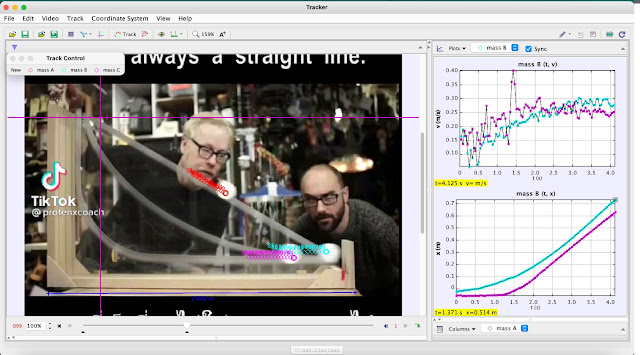
Read more: Which ball will reach the bottom of the tracks first?

- Details
- Written by Z. Darren Tan
- Parent Category: 03 Motion & Forces
- Category: 02 Dynamics
- Hits: 6446
Read more: Mass and Spring in Projectile Motion HTML5 JavaScript Simulation by Darren Z Tan

- Details
- Written by Siti
- Parent Category: 03 Motion & Forces
- Category: 02 Dynamics
- Hits: 10166
Read more: Elasticity of Rubber Bands for a hammock HTML5 Applet Javascript
- Details
- Written by Loo Kang Wee
- Parent Category: 03 Motion & Forces
- Category: 02 Dynamics
- Hits: 10274
- Details
- Written by Loo Kang Wee
- Parent Category: 03 Motion & Forces
- Category: 02 Dynamics
- Hits: 12114
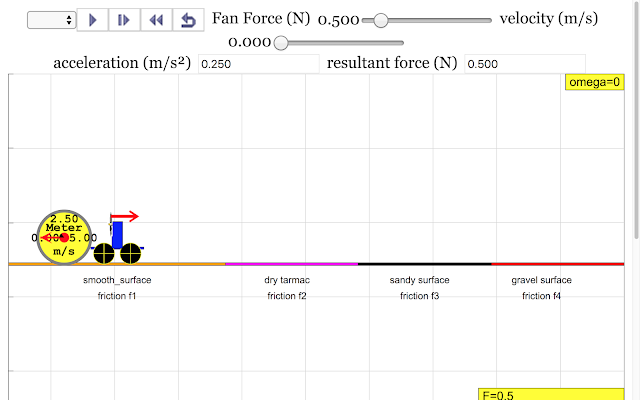
Read more: Resultant Force and Motion under Different Friction Simulator HTML5
- Details
- Written by Wei Chiong
- Parent Category: 03 Motion & Forces
- Category: 02 Dynamics
- Hits: 7613
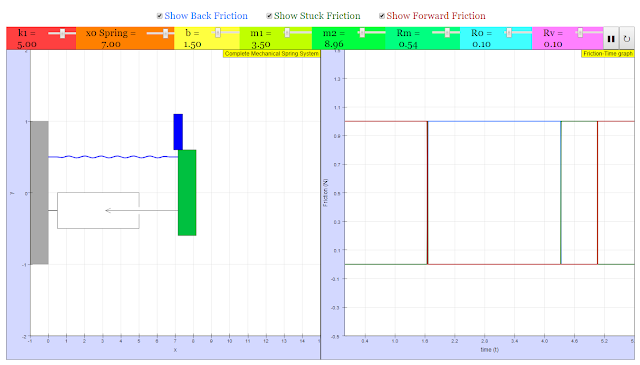
Read more: Mechanical Spring-Mass System JavaScript Simulation Applet HTML5


- Details
- Written by Fremont
- Parent Category: 03 Motion & Forces
- Category: 02 Dynamics
- Hits: 6522
Read more: Pushing On Two Blocks JavaScript Simulation Applet HTML5
- Details
- Written by Fremont
- Parent Category: 03 Motion & Forces
- Category: 02 Dynamics
- Hits: 7066
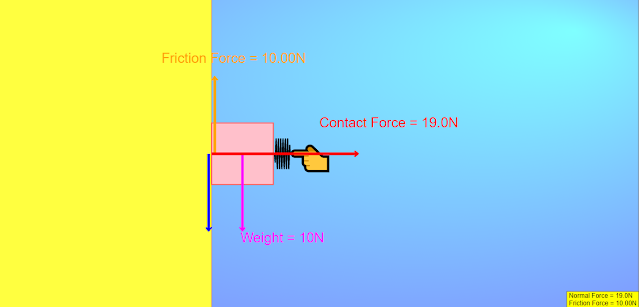
Read more: Pushing On a Block JavaScript Simulation Applet HTML5

- Details
- Written by Fremont
- Parent Category: 03 Motion & Forces
- Category: 02 Dynamics
- Hits: 7520
Read more: 💥Inelastic Collision JavaScript Simulation Applet HTML5
- Details
- Written by Wei Chiong
- Parent Category: 03 Motion & Forces
- Category: 02 Dynamics
- Hits: 7023
Read more: ⚽Ball Toss Simplified Video Model JavaScript Simulation Applet HTML5
- Details
- Written by Wei Chiong
- Parent Category: 03 Motion & Forces
- Category: 02 Dynamics
- Hits: 7832
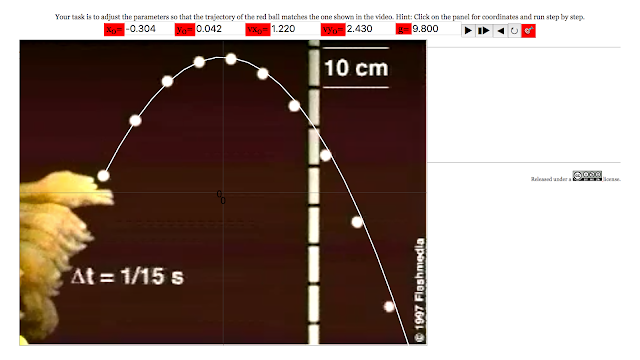
Read more: ⚽Ball Toss Video Model JavaScript Simulation Applet HTML5

- Details
- Written by Fremont
- Parent Category: 03 Motion & Forces
- Category: 02 Dynamics
- Hits: 12620
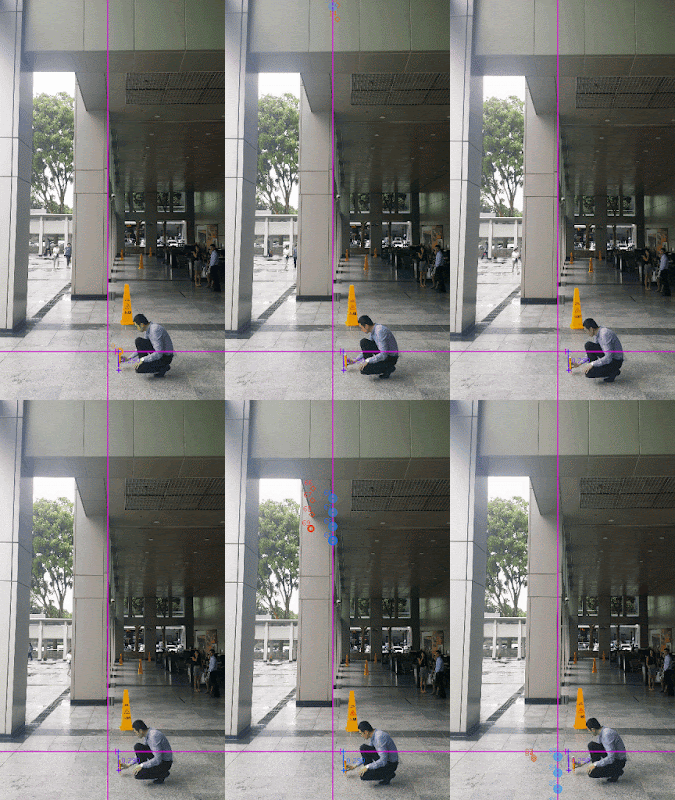
Read more: 🎱2D Collision with Game JavaScript HTML5 Applet Simulation Model by Foo FF
- Details
- Written by Fremont
- Parent Category: 03 Motion & Forces
- Category: 02 Dynamics
- Hits: 8171
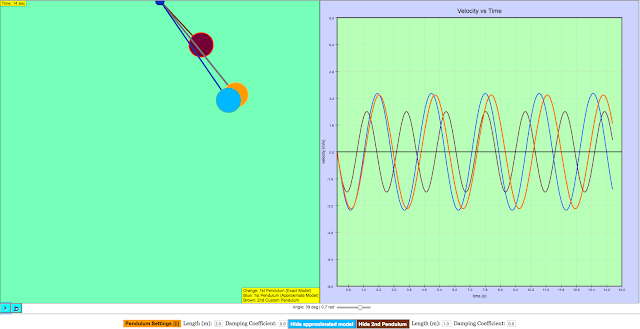
Read more: Two Pendulum Real and Theory JavaScript HTML5 Applet Simulation Model by Lam MH
- Details
- Written by Fremont
- Parent Category: 03 Motion & Forces
- Category: 02 Dynamics
- Hits: 13331
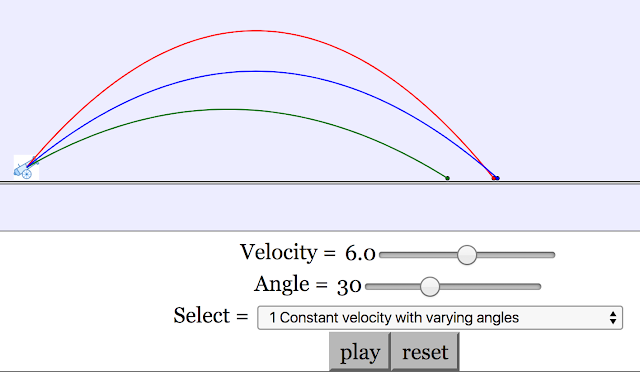
Read more: Projectile Motion with Comparison JavaScript HTML5 Applet Simulation Model by John Low
- Details
- Written by Loo Kang Wee
- Parent Category: 03 Motion & Forces
- Category: 02 Dynamics
- Hits: 46402

- Details
- Written by Loo Kang Wee
- Parent Category: 03 Motion & Forces
- Category: 02 Dynamics
- Hits: 26446

- Details
- Written by Loo Kang Wee
- Parent Category: 03 Motion & Forces
- Category: 02 Dynamics
- Hits: 8297
- Details
- Written by Loo Kang Wee
- Parent Category: 03 Motion & Forces
- Category: 02 Dynamics
- Hits: 19449
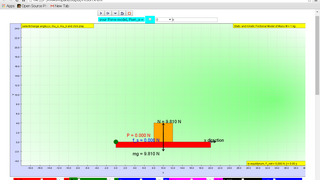
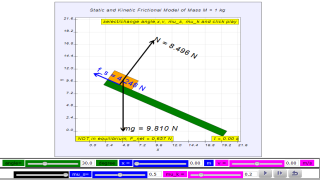
Read more: Static and Kinetic Frictional Model of Mass M 1 kg Simulation for Physics Learning
- Details
- Parent Category: 03 Motion & Forces
- Category: 02 Dynamics
- Hits: 49932
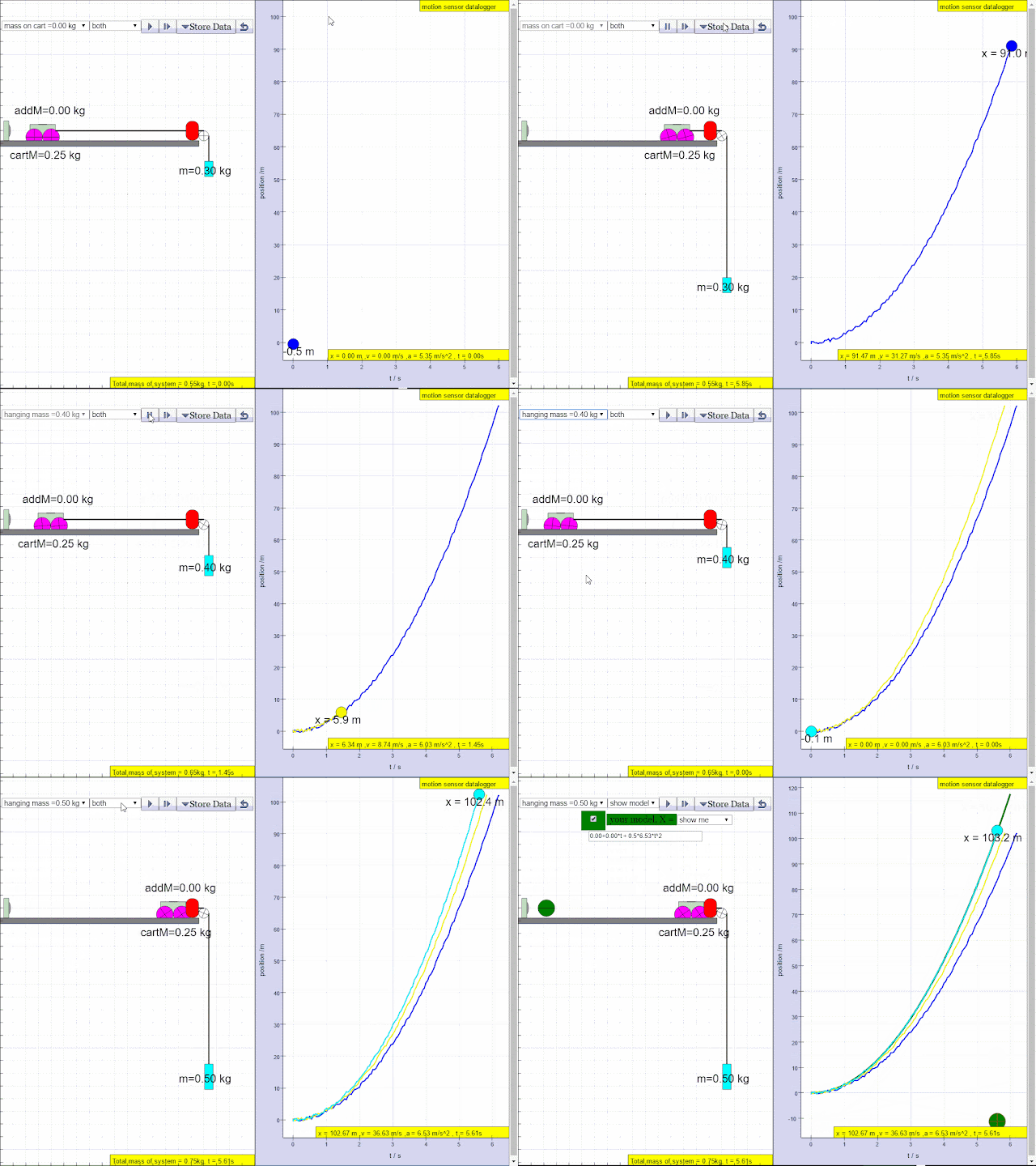
Read more: Modified Atwood Machine Simulation for Physics Learning

- Details
- Written by Loo Kang Wee
- Parent Category: 03 Motion & Forces
- Category: 02 Dynamics
- Hits: 12365
Read more: Tracker Ping Pong Ball Falling JavaScript HTML5 Applet Simulation Model

- Details
- Written by Loo Kang Wee
- Parent Category: 03 Motion & Forces
- Category: 02 Dynamics
- Hits: 14822

- Details
- Written by Loo Kang Wee
- Parent Category: 03 Motion & Forces
- Category: 02 Dynamics
- Hits: 8407
Read more: Tracker Super Stunter Boomerang Plane by Bertram Lim
- Details
- Written by Loo Kang Wee
- Parent Category: 03 Motion & Forces
- Category: 02 Dynamics
- Hits: 41441
- Details
- Written by Loo Kang Wee
- Parent Category: 03 Motion & Forces
- Category: 02 Dynamics
- Hits: 8058
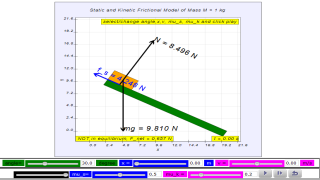
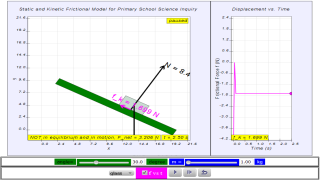
Read more: Frictional Model of Mass M = 1 kg Primary JavaScript HTML5 Applet Simulation Model

- Details
- Written by Loo Kang Wee
- Parent Category: 03 Motion & Forces
- Category: 02 Dynamics
- Hits: 53642
Read more: Hookes Law Model by PhET Simulation for Physics Learning
- Details
- Written by Loo Kang Wee
- Parent Category: 03 Motion & Forces
- Category: 02 Dynamics
- Hits: 9537
- Details
- Written by Loo Kang Wee
- Parent Category: 03 Motion & Forces
- Category: 02 Dynamics
- Hits: 9106
- Details
- Written by Loo Kang Wee
- Parent Category: 03 Motion & Forces
- Category: 02 Dynamics
- Hits: 8172
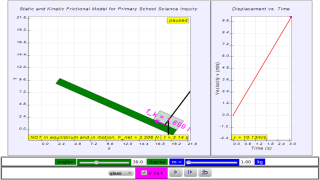
Read more: Frictional Model of Mass M = 1 kg Secondary JavaScript HTML5 Applet Simulation Model
- Details
- Written by Loo Kang Wee
- Parent Category: 03 Motion & Forces
- Category: 02 Dynamics
- Hits: 8845

- Details
- Written by Loo Kang Wee
- Parent Category: 03 Motion & Forces
- Category: 02 Dynamics
- Hits: 13904
Read more: Pendulum 3D JavaScript HTML5 Applet Simulation Model
- Details
- Written by Loo Kang Wee
- Parent Category: 03 Motion & Forces
- Category: 02 Dynamics
- Hits: 20044
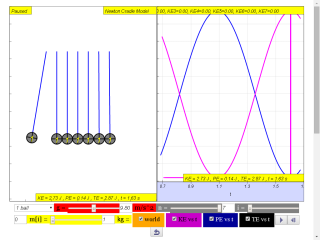
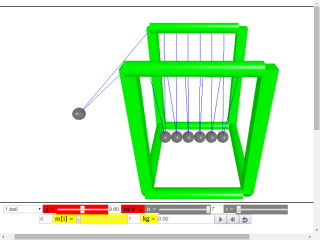
Read more: Newton Cradle (3D) Simulation for Physics Learning

- Details
- Written by Loo Kang Wee
- Parent Category: 03 Motion & Forces
- Category: 02 Dynamics
- Hits: 11703
Read more: Astro Blaster Toy JavaScript HTML5 Applet Simulation Model

- Details
- Written by Loo Kang Wee
- Parent Category: 03 Motion & Forces
- Category: 02 Dynamics
- Hits: 12965


- Details
- Written by leongster
- Parent Category: 03 Motion & Forces
- Category: 02 Dynamics
- Hits: 8951
Read more: Tracker Bouncing Cart Tracker Model by Leong Tze Kwang