7.5 Kepler’s Third Law
7.5.1 Newton's Second Law in Circular Motion to derive Kepler’s Third
Law T2 α r3
By analysing the free body diagram of a satellite in circular orbit, the
equation for Newton's Second Law is,
i.e. ΣF = mrω2
Recalling in circular motion angular velocity and its period are related
as follow,
Hence,
Which can be simplified to an equation involving T and r
This is the Kepler’s Third Law, which states that the square
of the period of an object in circular orbit is directly
proportional to the cube of the radius of its orbit. T2
α r3
7.5.1.1 Note:
The Kepler’s Third Law T2 α r3 is only applicable
to masses in circular orbit, whereby the gravitational force is the only
force acting on it and thus it acts as the centripetal force.
7.5.1.2 Activity
Complete ICT inquiry worksheet 2 to build your conceptual understanding
on Kepler’s Third Law.
7.5.1.3 Steps to support your inquiry
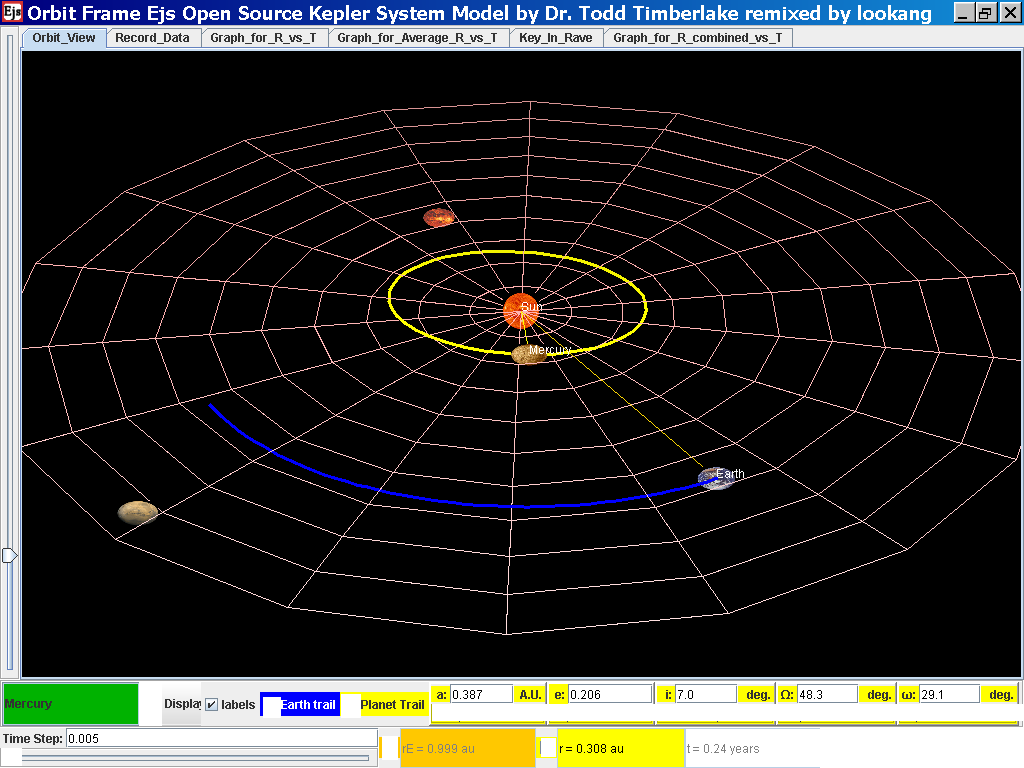
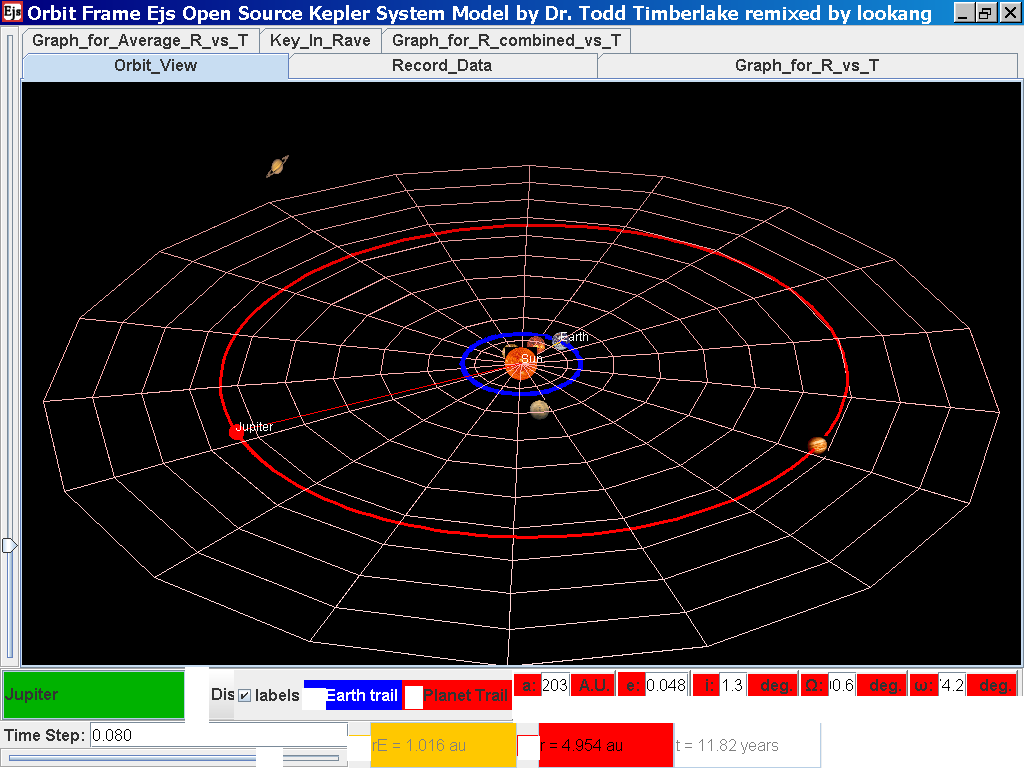
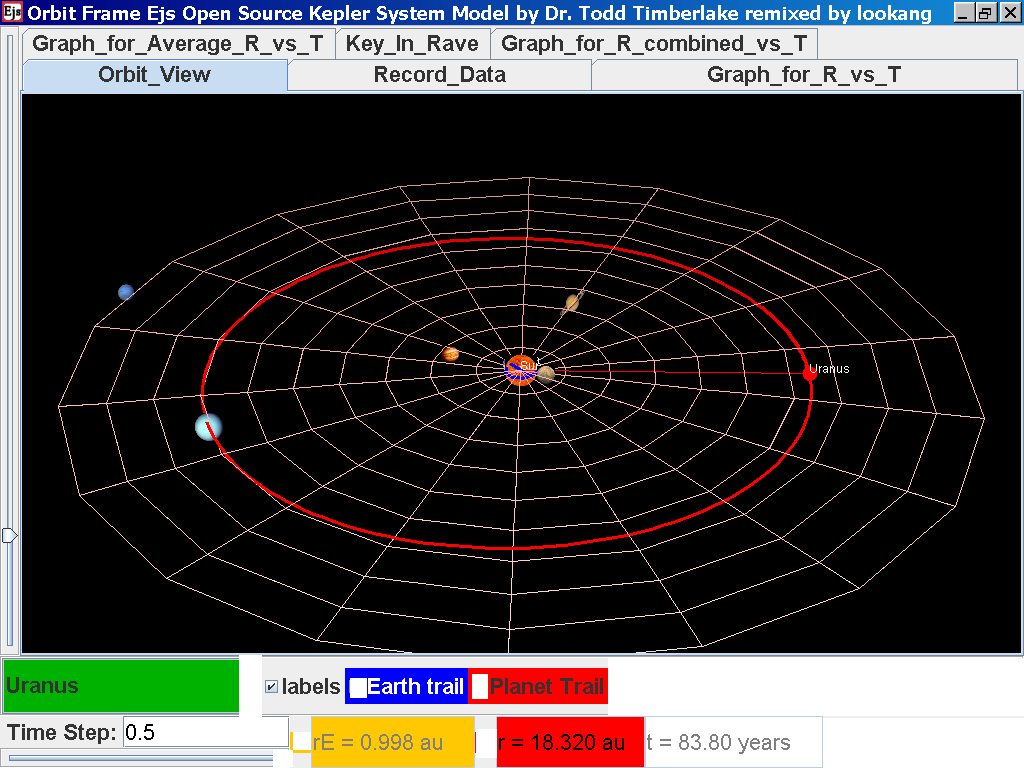
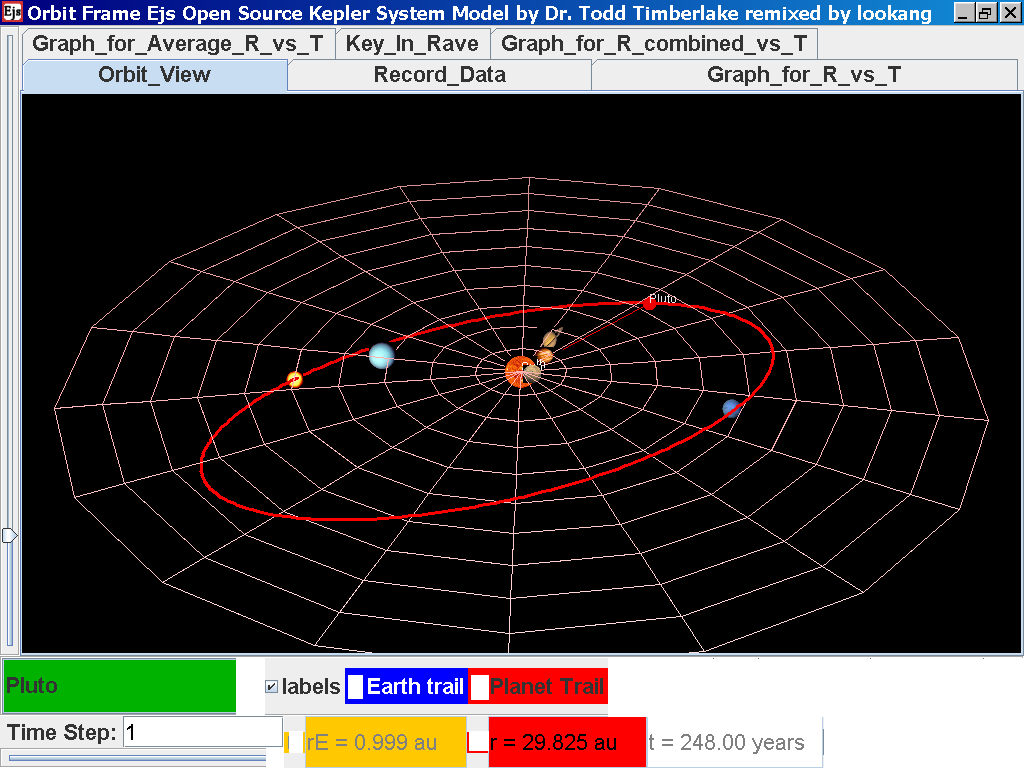
Select from the drop-down menu the planet, say Mercury to show the
orbital radius and click play.
Click Pause to stop the simulation when the planet Mercury is almost at
the time of 1 complete cycle or period T.
Click Step to fine tune your determination of period T, say t =0.24 years
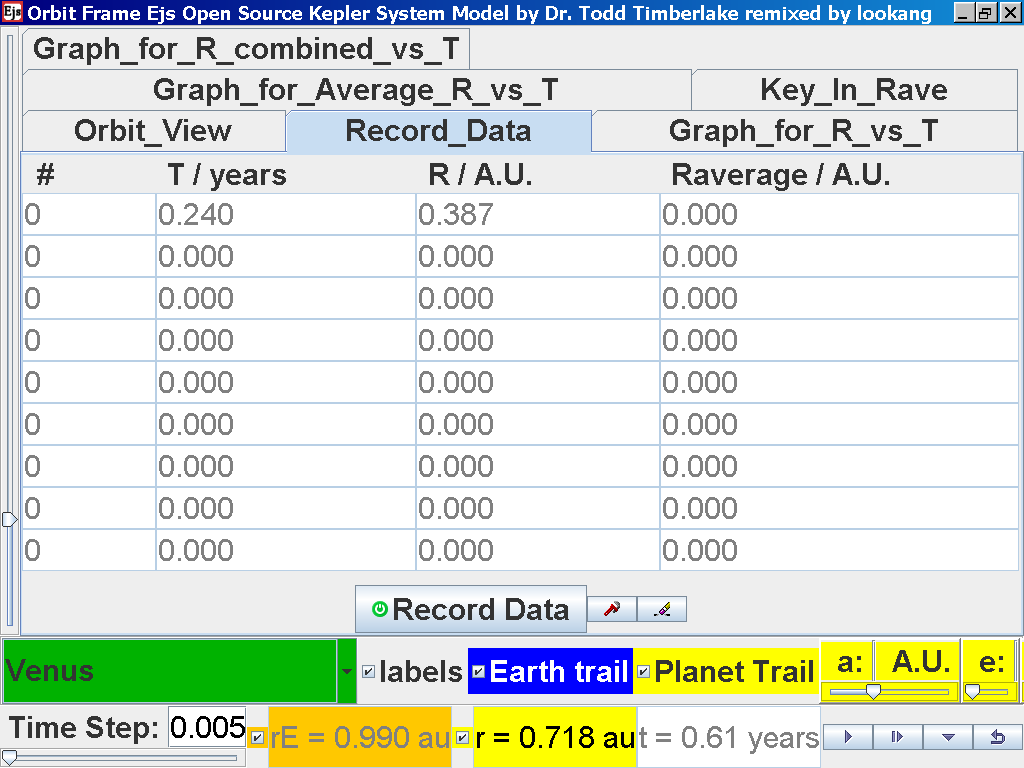
Click on the adjacent tab Record_Data and select Record Data button to
store this data on the mean radius Rm and period (time for one complete
cycle) T of motion.
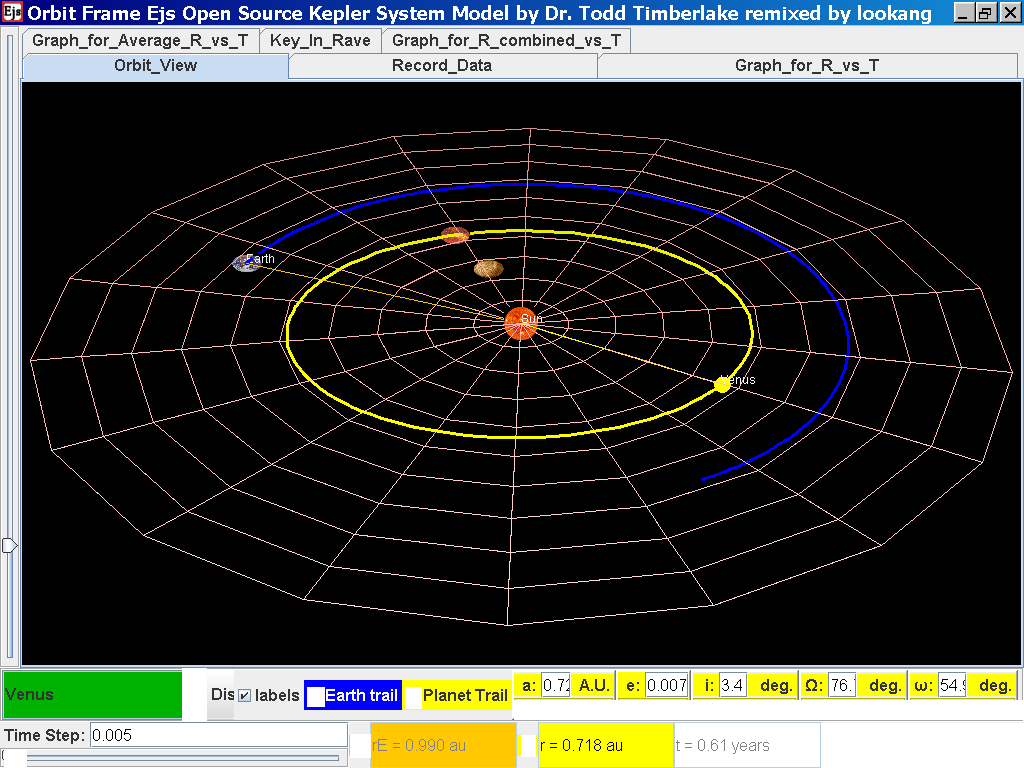
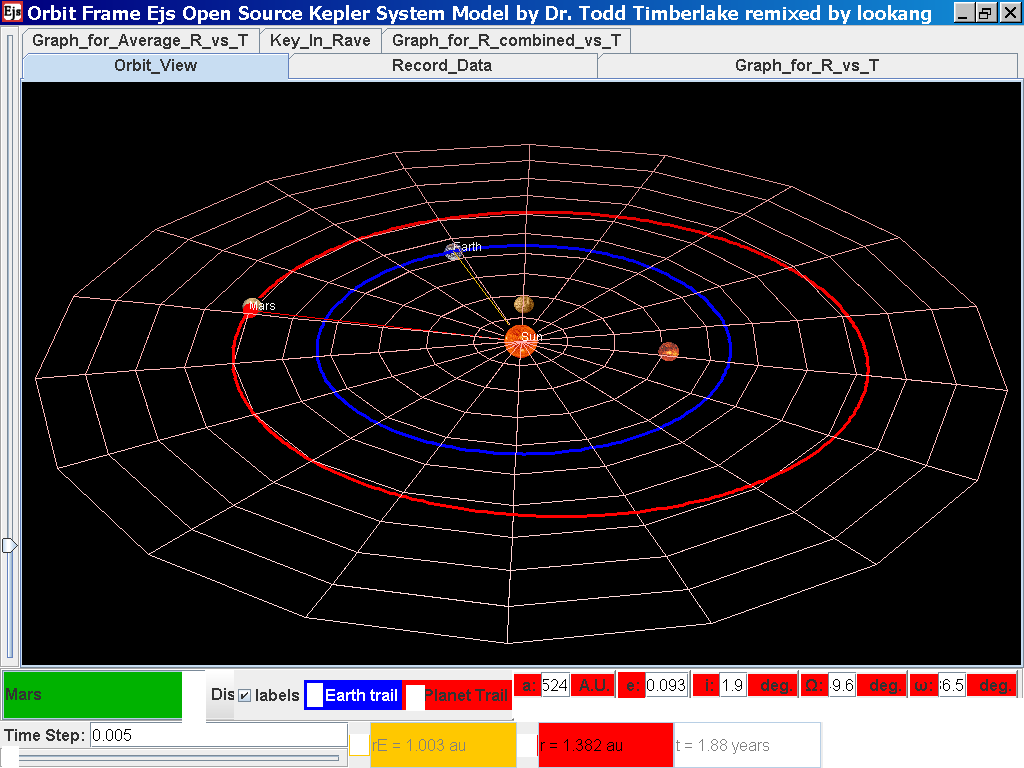
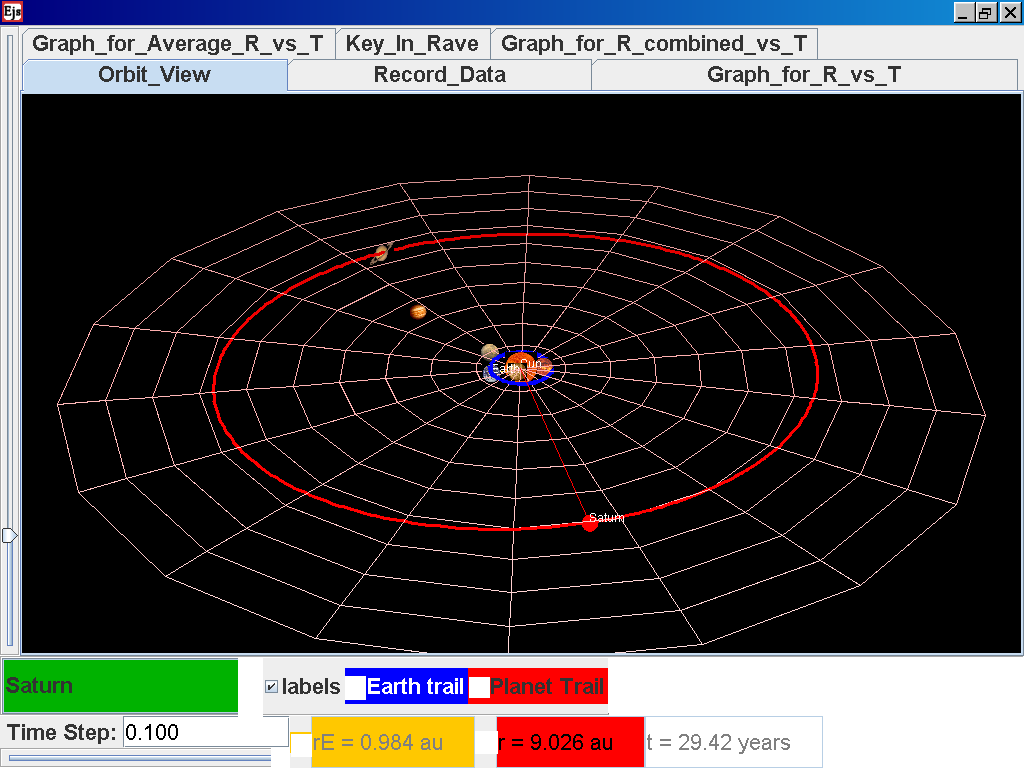
Click back to the Orbit_View and to go to the next planet to collect data,
select from the drop down menu again and select the next planet say Venus.
Play the simulation for one complete cycle.
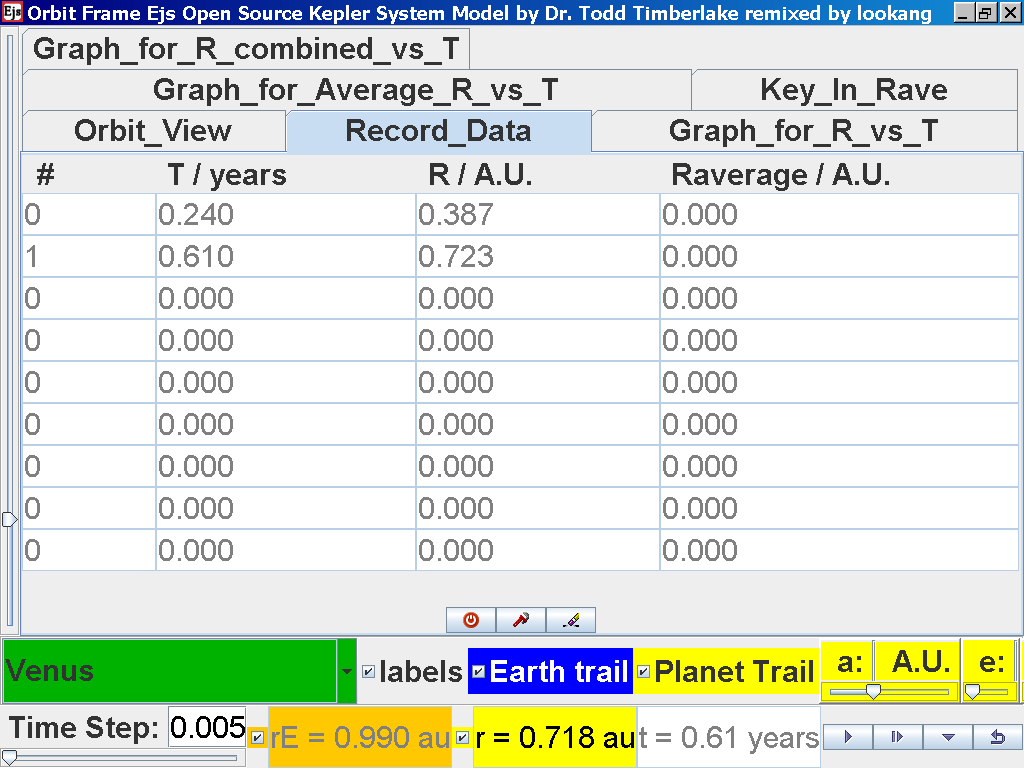
Click again on the next tab Record_Data and select Record_Data.
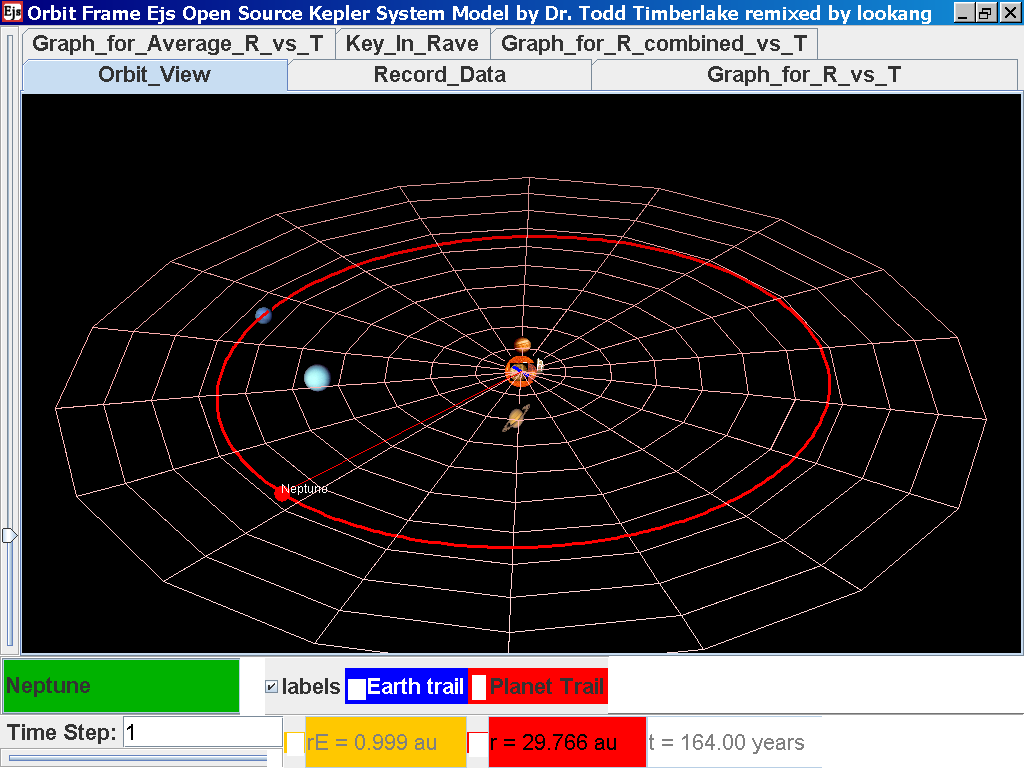
Repeat the above steps for the rest of the planets i.e. Earth, Mars,
Jupiter, Saturn, Uranus, Neptune and Pluto. (Click back to the Orbit_View
and to go to the next planet to collect data, select from the drop down menu
again and select the next planet say Earth. Play the simulation for one
complete cycle. )
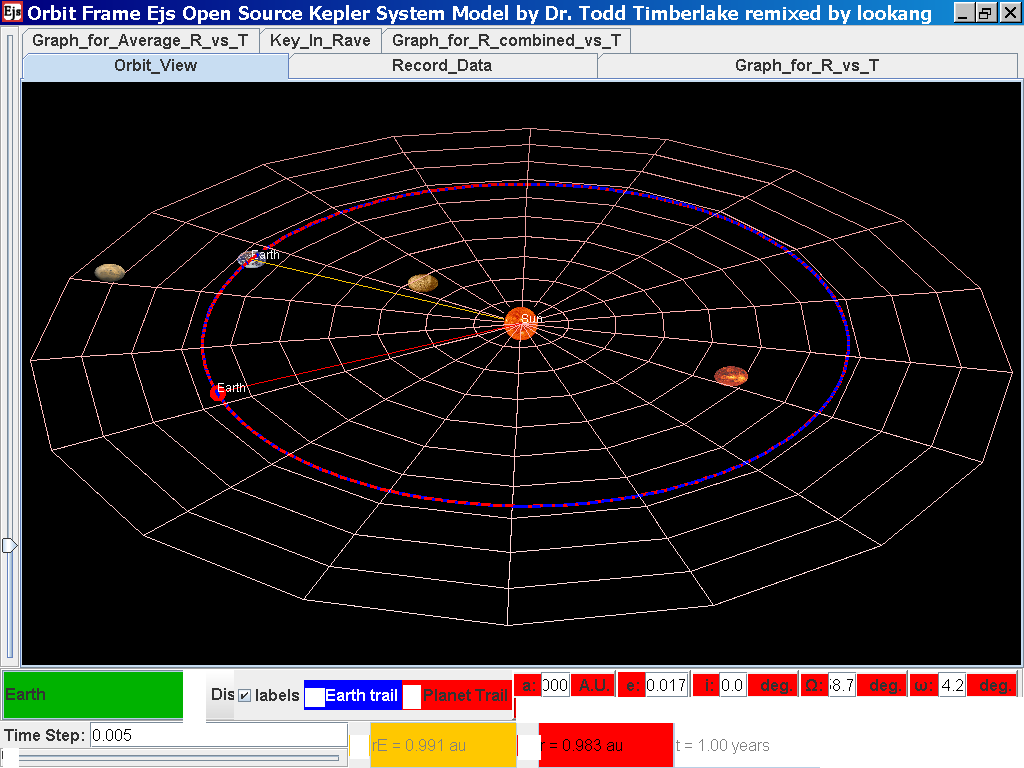
Click again on the next tab Record_Data and select Record_Data.
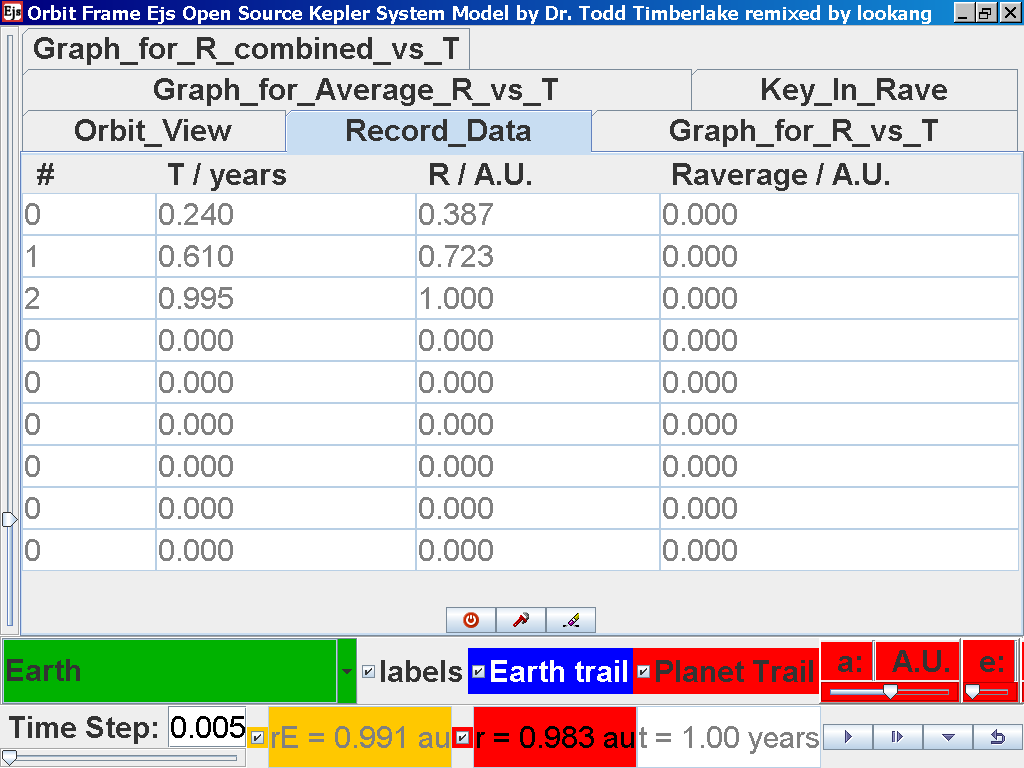
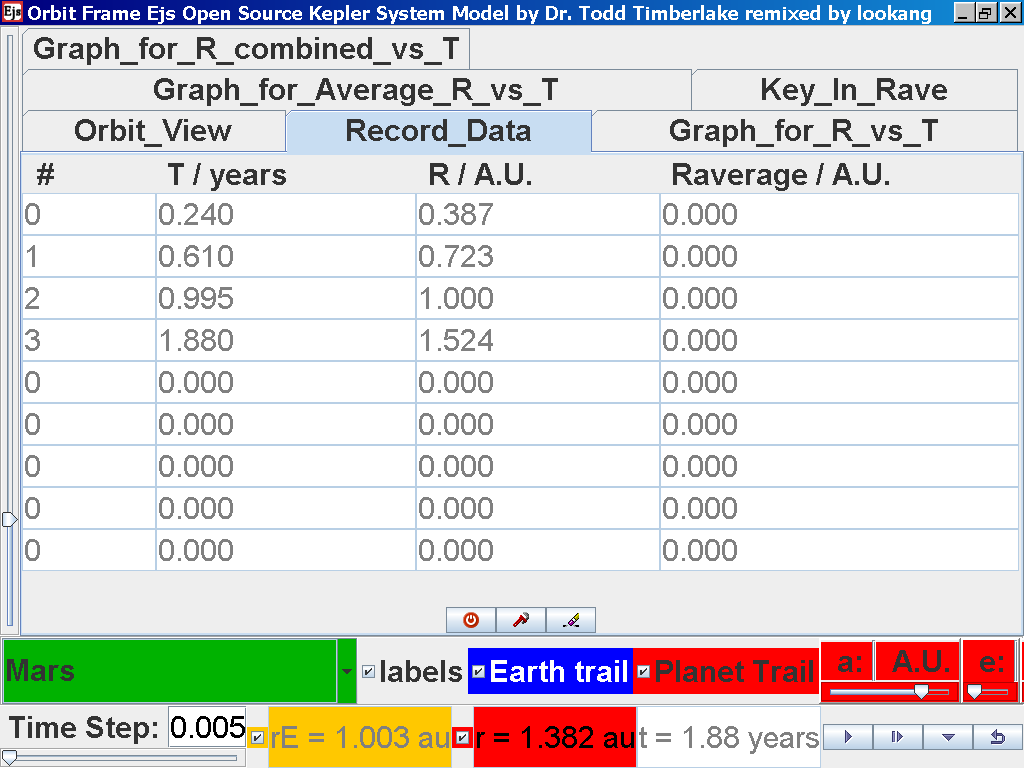
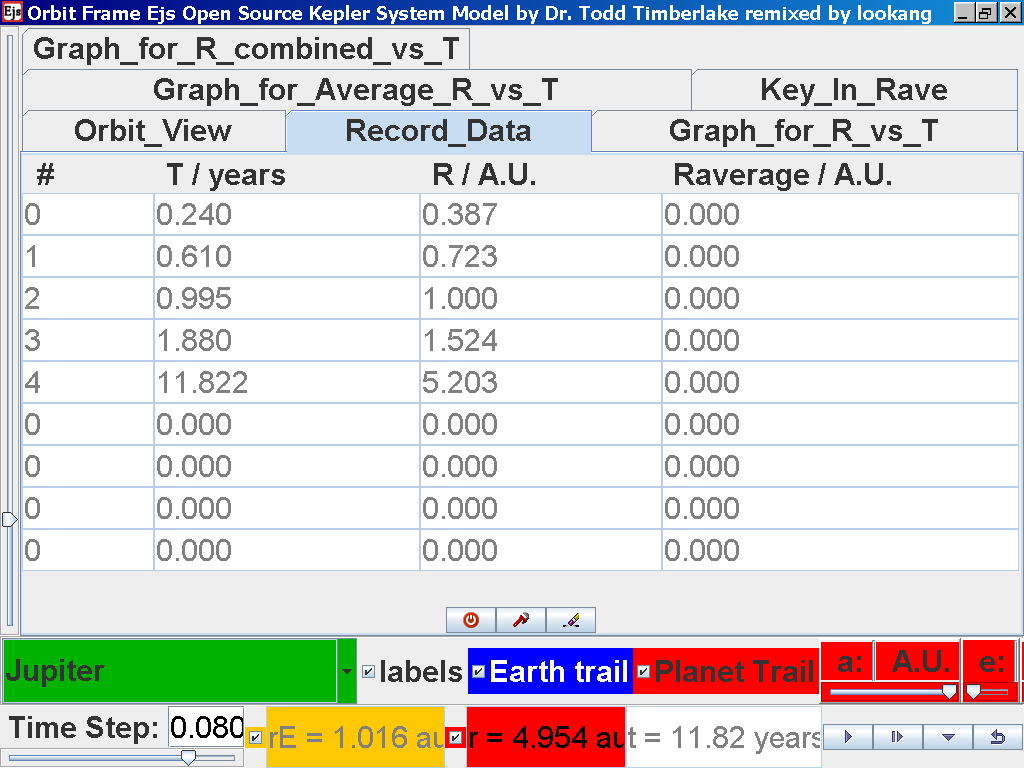
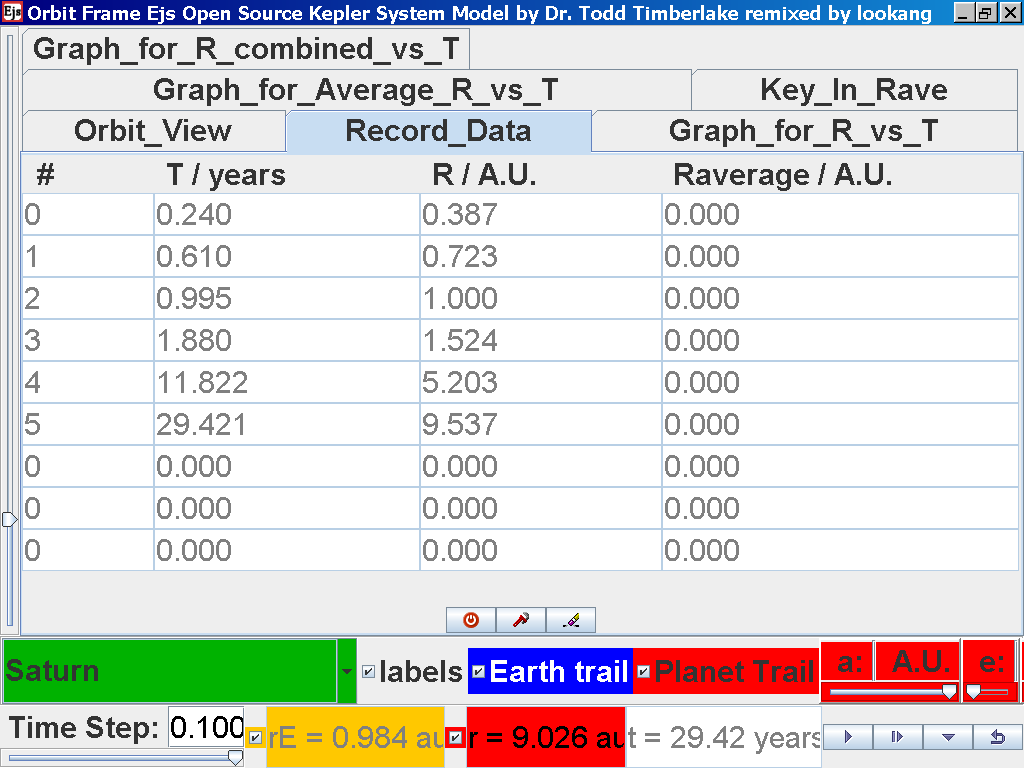
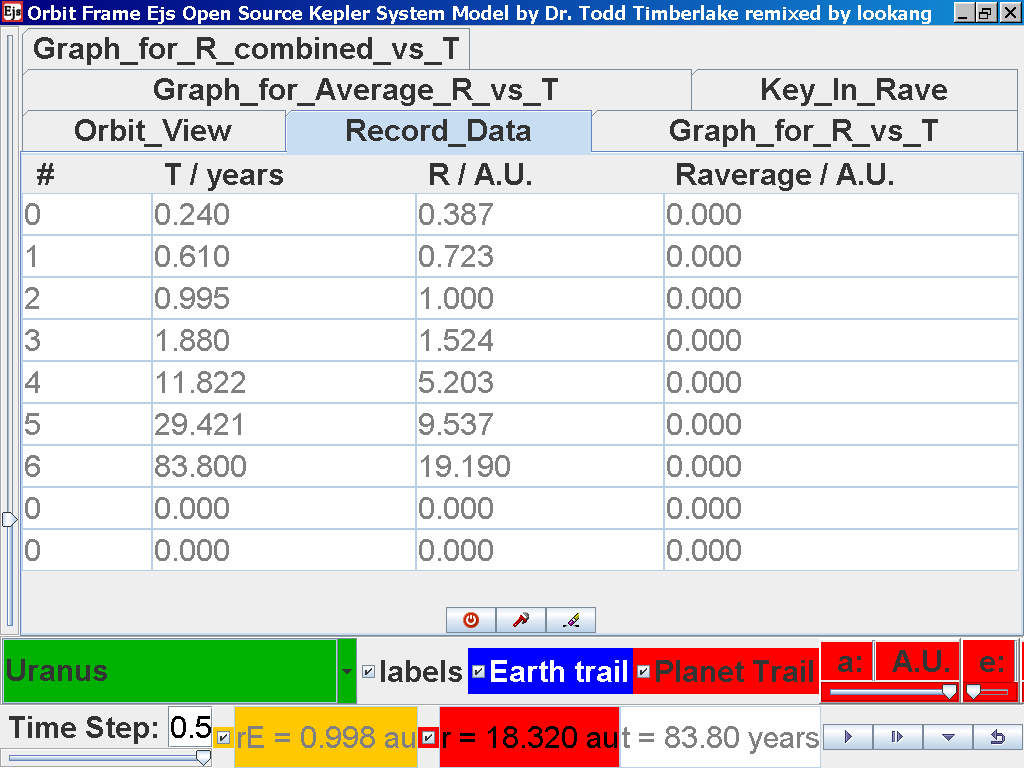
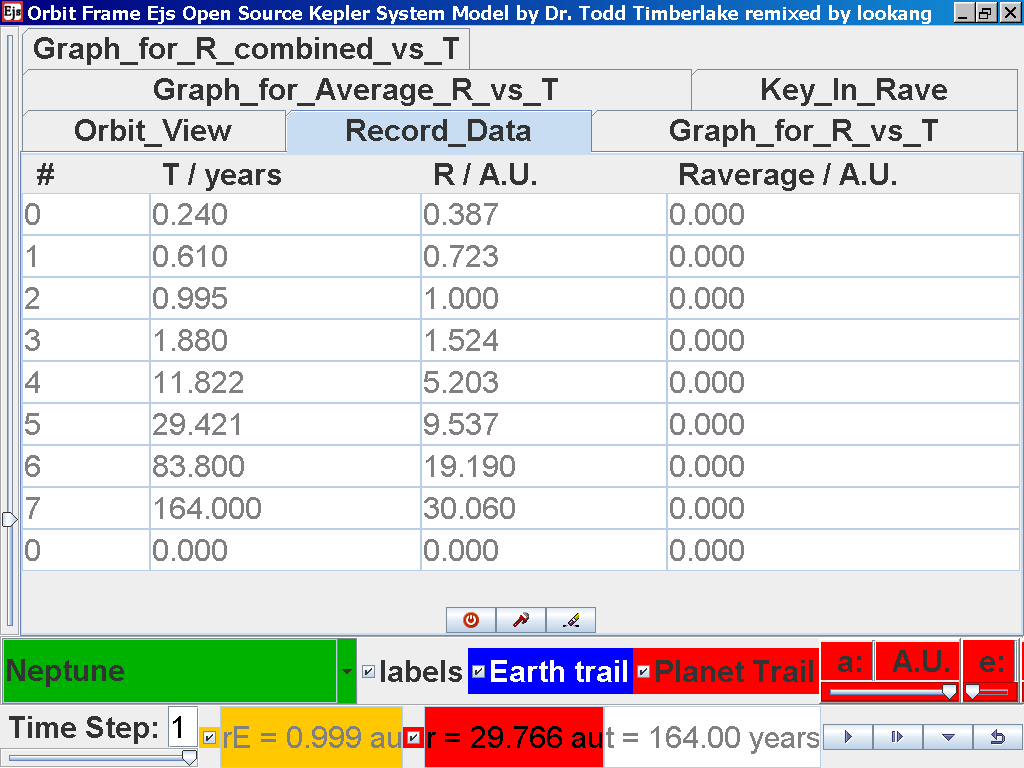
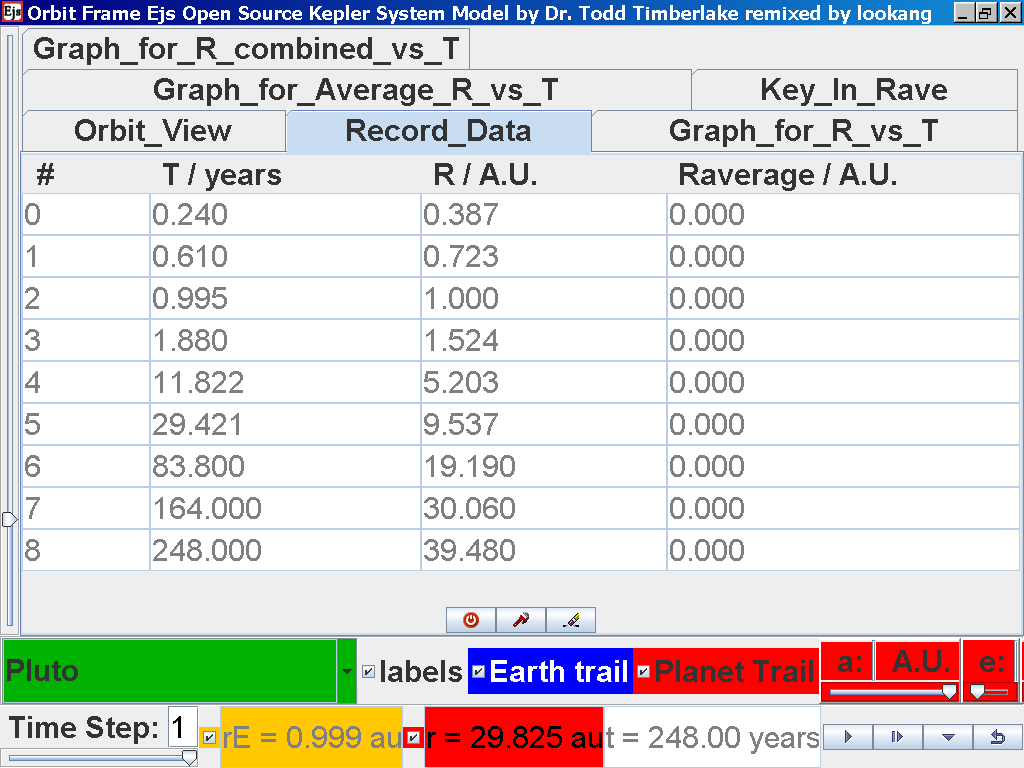
Notice all the data on the actual T /years recorded by you are slightly
different compared to the mean radius of orbits R has units of A.U.
(astronomical units) where by 1 A.U. = mean distance of Earth to Sun.
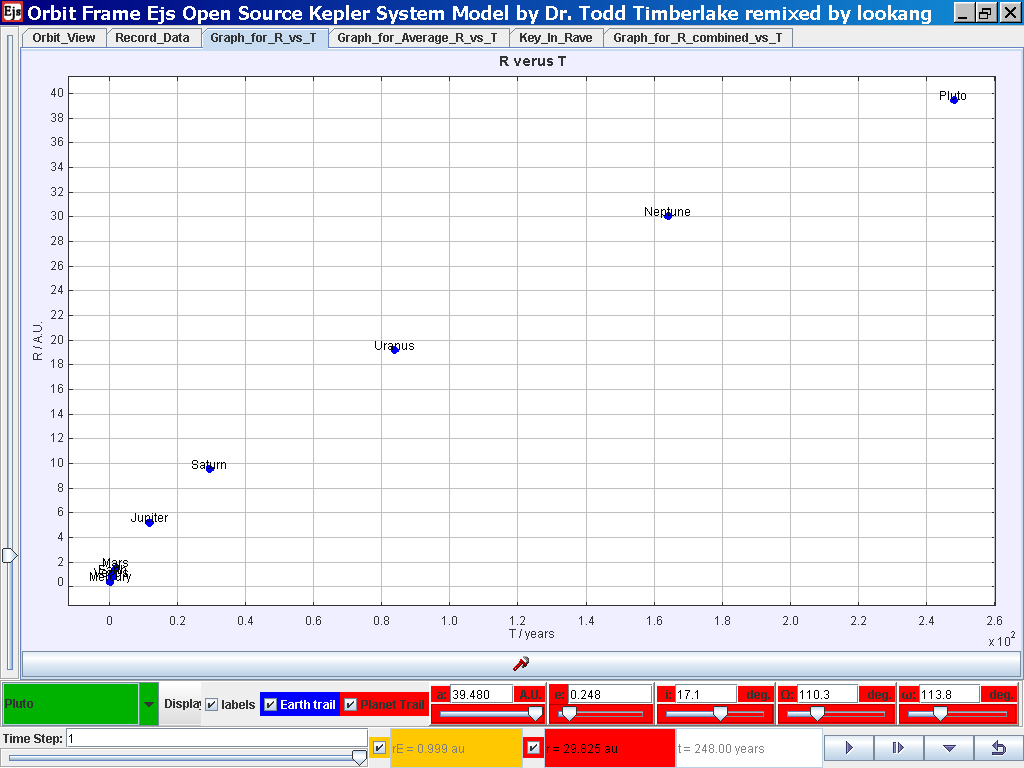
Select the tab Graph_for_R_vs_T and the simulation automatically plots the
data.
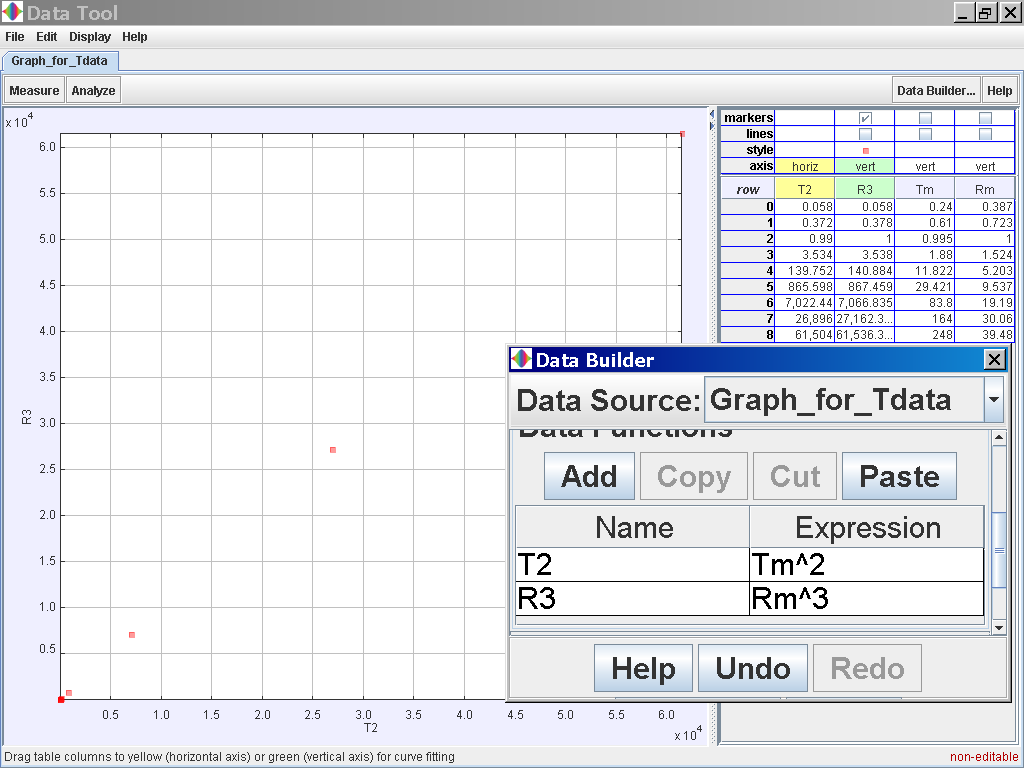
Click on the Data Analysis Tool to bring up the following pop up view for
further trend fitting.
Select the Data Builder Button at the top right corner
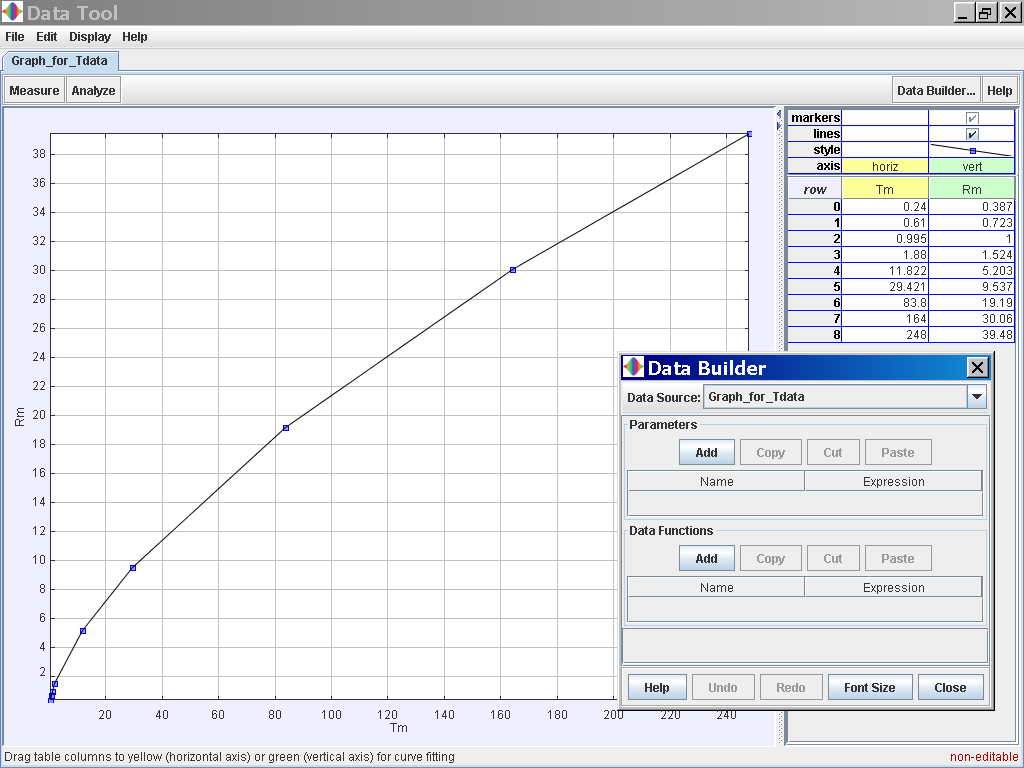
Click on the Data Function Add button to add your own functions such as T2
for Tmean2 and R3 for rmean3.
 Click on the Analyse
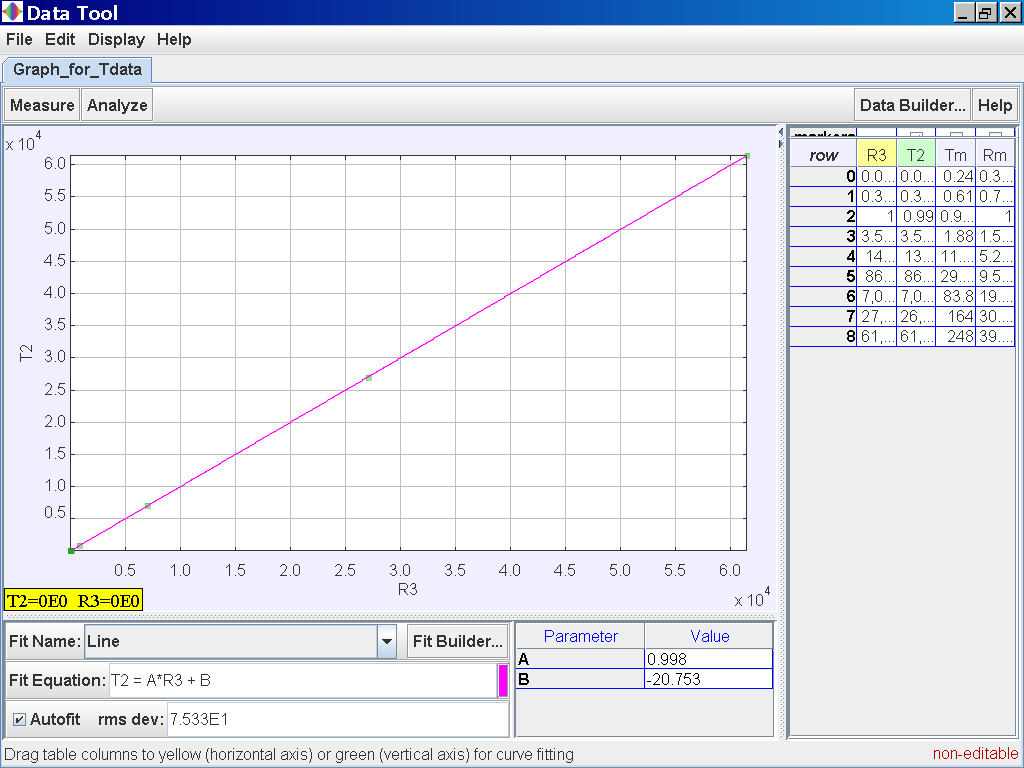
button on the top left corner and select the Linear Fit Option of which the
data of T2 and R3 is related by the following line fit
Click on the Analyse
button on the top left corner and select the Linear Fit Option of which the
data of T2 and R3 is related by the following line fit
T2 = 0.998 R3 -20.753 which suggests T2 α
r3
Alternatively, you can also try to plot log (T) versus log (R)
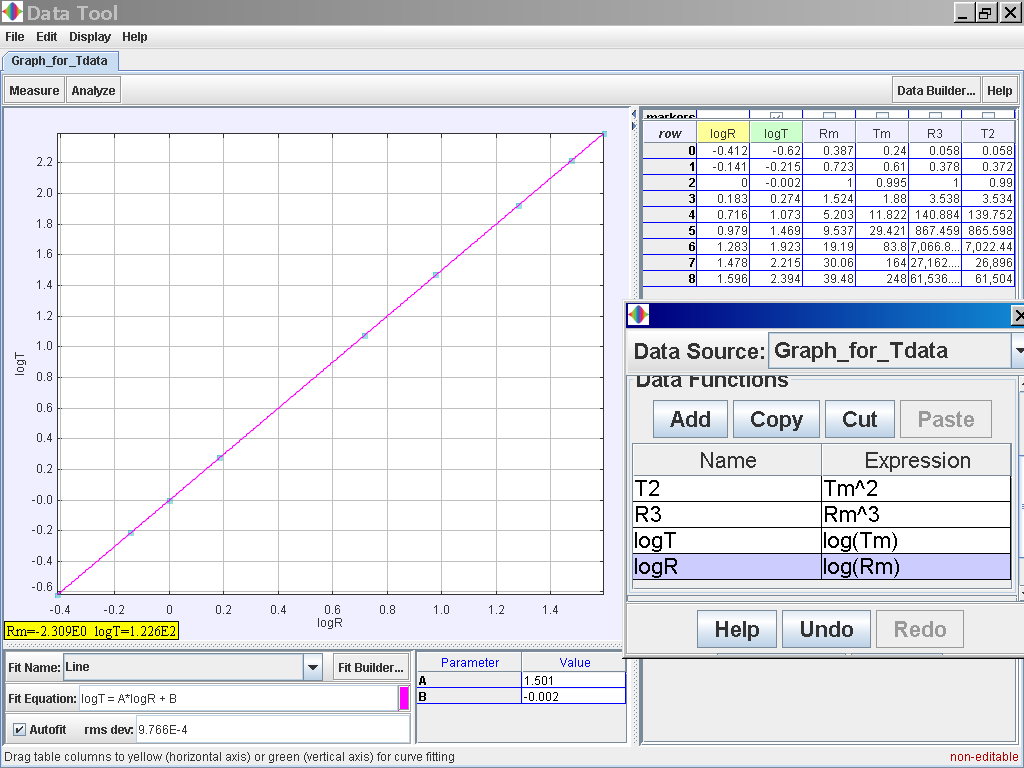
Notice that log (T) = 1.501 log (R) -0.002 which suggests the relationship
of T α r1.5 or simply T2 α r3
7.5.1.4 YouTube
- https://youtu.be/jt88koyZQuw
Discovering Kepler 3rd System by inquiry collect data like scientists
7.5.1.5 Java simulation for the full inquiry described above
- http://iwant2study.org/lookangejss/02_newtonianmechanics_7gravity/ejs/ejs_model_KeplerSystem3rdLaw09.jar
7.5.1.6 Model, you can record down the time for each planet's one
revolution to determine if T2 α r3 is valid
- https://dl.dropboxusercontent.com/u/44365627/lookangEJSworkspace/export/ejss_model_gravity09/gravity09_Simulation.xhtml
- http://iwant2study.org/ospsg/index.php/interactive-resources/physics/02-newtonian-mechanics/08-gravity/241-gravity09